
Blog
What is a witch doctor in different cultural contexts?
A respectful explanation of the broad, contested phrase “witch doctor” and why a practitioner's own context matters.
· 3 min read
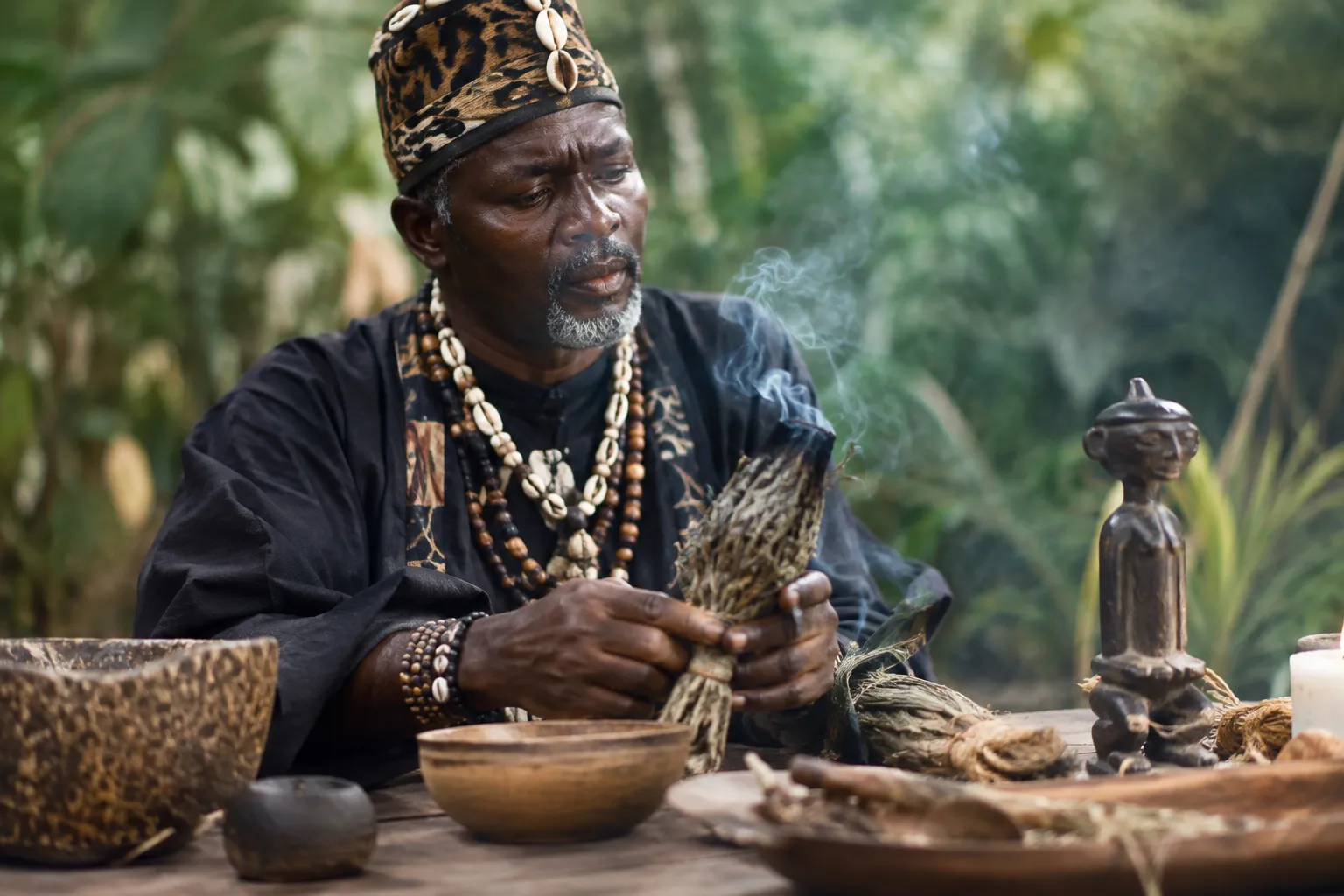
The phrase “witch doctor” is used for different kinds of traditional or spiritual practitioners, but it is imprecise and can be offensive. Its meaning depends on who is using it, where, and what role they are describing.
- It is a broad label, not the name of one uniform profession or tradition.
- Some people use it to mean a healer or spiritual practitioner; others use it dismissively.
- Practitioners may use more specific terms rooted in their language, community, or tradition.
- A person’s beliefs and services should not be assumed from the label alone.
What does “witch doctor” mean?
The phrase is a general, contested label sometimes applied to a traditional healer, spiritual practitioner, or diviner. It does not identify one shared set of beliefs, methods, or responsibilities. “Doctor” may suggest a medically qualified professional, but someone described by this label is not necessarily a licensed medical doctor.
People may use the term casually, in media, or in translation, even when a practitioner would choose another name. A broad outside label can flatten distinctions between community roles and spiritual traditions. There is no single African tradition of healing; beliefs and roles differ among countries and communities and change over time.
Roles and practices vary
People may use the phrase to refer to practitioners associated with spiritual guidance, traditional healing, divination, ritual, or support during personal and family difficulties. These are broad associations, not a checklist that applies to every person given the label.
A practitioner may focus on one kind of work and not another. The terms used, methods involved, and reasons someone seeks help depend on the practitioner and context. It is inaccurate to assume every person described this way performs spells, treats illness, or holds the same community position.
When you encounter the term, consider who is using it: the practitioner’s own description, a community member’s account, a translation, or an outside writer’s label. Then look for a clear explanation of the person’s actual role.
Questions to ask about a service
If you are considering spiritual support, ask what name the practitioner uses for their role, what a consultation involves, what fees apply, and what limits they acknowledge. Be cautious of pressure based on claims that you are cursed, unsafe, or certain to lose a relationship unless you pay.
A claim about a curse or black magic is not proof of its cause. Relationship conflict can have many explanations. Reconciliation depends on each person’s freely made choices and willingness to reconnect. Spiritual support should not replace practical steps for communication, personal safety, or family needs.
Frequently asked questions
Is “witch doctor” a racist term?
It can be, especially when used to mock or stereotype African people and traditions. Because it is imprecise and may carry insulting associations, use a practitioner’s own term when possible.
What is the difference between a shaman and a witch doctor?
Both are broad labels applied to spiritual practitioners, but they are not interchangeable titles and do not describe one shared set of practices. Meaning depends on the community, language, and person being described.
Can a witch doctor diagnose illness?
A practitioner may interpret an experience spiritually, but that is not a medical diagnosis. For symptoms or health concerns, consult a qualified health professional.